The Decision Most Homeowners Get Wrong
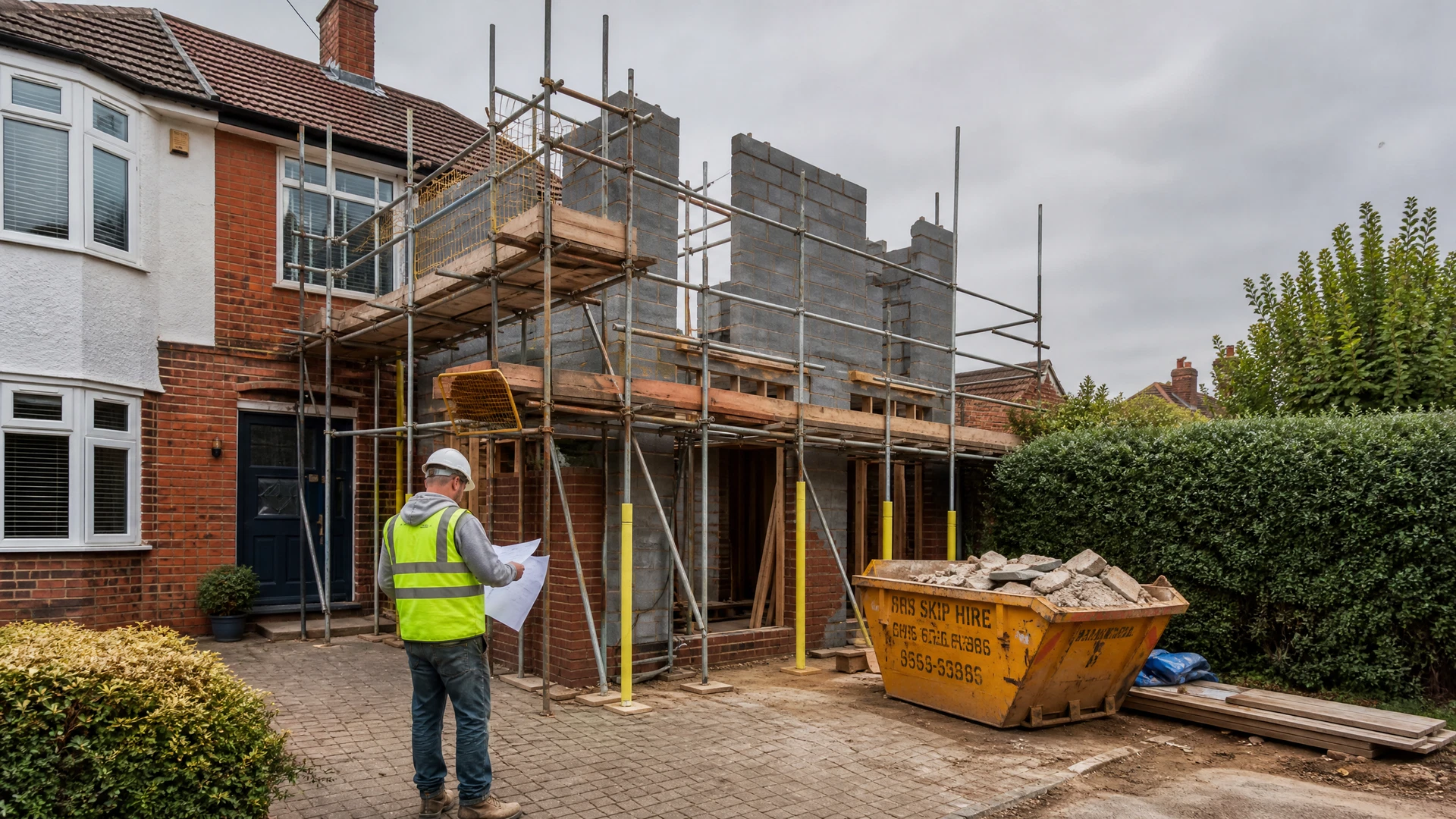
A single-storey extension and a double-storey extension solve different space needs. If future upper-floor accommodation is a realistic possibility, that should be considered during the initial structural and planning design rather than assumed to be easy or cheaper to add later.
The right choice depends on what you need, what your property allows, and what your budget can accommodate. This guide works through each factor directly.
Single vs Double-Storey: At a Glance
| Factor | Single-Storey | Double-Storey |
|---|---|---|
| Budget basis | Project-specific quotation | Project-specific quotation |
| Cost per usable area | Compare only on matched scope | Compare only on matched scope |
| Planning route | Property and design specific | Property and design specific |
| Approval programme | Project-specific | Project-specific |
| Build programme | Project-specific | Project-specific |
| Disruption | Depends on access/opening-up and occupied areas | Adds upper-floor interfaces as well as ground-floor work |
| Property value | No guaranteed uplift | No guaranteed uplift |
| Typical brief | Additional ground-floor space | Ground-floor plus upper-floor accommodation |
Cost Comparison
There is no approved TCM-wide Hertfordshire price or £/m² benchmark for either extension type. Compare the same footprint, structure, roof, openings, services, specification, professional/statutory costs, VAT basis, allowances and exclusions in current project-specific quotations.
Some site setup, groundworks and envelope interfaces can serve more than one storey, while an additional storey also adds structure, walls, openings, services and internal work. The net cost relationship depends on the design and cannot be reduced to a universal per-square-metre rule.
If the long-term brief may need both ground-floor and upper-floor space, compare that option at design stage. An existing single-storey extension should not be assumed to accept another storey: the original foundations, walls, connections and planning position require project-specific assessment.
Planning Permission
Planning is an important difference, but the route is determined by the exact property and proposal rather than the words “single-storey” or “double-storey” alone. Permitted-development rights contain detailed limitations and conditions, and previous development or local restrictions can affect them.
- Single-storey proposals: check the current Class A limitations and conditions, including property type, dimensions, previous additions and designated land.
- More-than-one-storey proposals: check the stricter conditions that apply to the actual design rather than assuming permission is always required or always available.
- Prior approval and other consents: where a statutory prior-approval route or another consent is relevant, confirm the current procedure and evidence requirements for the property.
Do not assume every double-storey proposal requires a full planning application or that a stated fee or determination period will apply. Check the current national permitted-development rules, the property planning history, local design guidance and any site-specific restrictions before choosing the planning route.
Flats, listed buildings, designated land, Article 4 directions and planning conditions can require different permission or consent routes. Check the exact property and proposal rather than applying a town-wide rule or assuming a longer fixed approval period.
Build Time and Disruption
Programme is project-specific for both types. A double-storey project can introduce additional structure, envelope, services and internal work, but design, approvals, access, procurement, specialist trades, weather and changes to scope all affect duration.
A double-storey extension can affect occupied rooms on more than one floor, while a single-storey project may concentrate disruption at ground level. Temporary protection, openings, access and affected services should be planned for the actual sequence rather than represented by a fixed number of disruptive weeks.
Whether the household can remain in the property depends on the agreed sequence, openings, services, temporary protection, safety and individual circumstances. Confirm occupancy arrangements in the project programme rather than assuming every household can stay throughout.
Property Value Impact
Both extension types can change the amount, layout and usefulness of a property, but neither carries a guaranteed market-value uplift. A single-storey scheme may focus on ground-floor living space; a double-storey scheme may also change bedroom or bathroom accommodation. The valuation effect is property- and market-specific.
If resale value is material to the choice, obtain current independent valuation evidence for the actual property and local market. Do not use generic TCM percentages, assumed bedroom premiums or illustrative house prices as an investment forecast.
The decision should be driven primarily by the space the household needs, what the property can support, the planning/design context, disruption and the project-specific budget. Treat financial return as a separate valuation question.
Which Type Is Right for Your Property?
Consider single-storey if: the brief is mainly additional ground-floor living space and the property/design can deliver that without unnecessary upper-floor work. Confirm the planning route and budget for the actual proposal.
Consider double-storey if: the household needs useful space on more than one floor and the site, planning and structural design support it. Compare the full project budget rather than assuming the best value per square metre.
Consider a loft conversion instead if: the priority is upper-floor accommodation and the measured roof, staircase, structure and planning context support it. Compare the loft option with the extension on usable space, disruption and project-specific quotation scope.
Frequently Asked Questions
Is a double-storey extension cheaper per square metre than a single-storey?
Not automatically. Some project-wide elements may serve both floors, but a double-storey extension also adds upper-floor structure, walls, services, openings and internal work. Compare the full project-specific quotations and useful floor area rather than applying a universal percentage saving per square metre.
Does a double-storey extension always need planning permission?
No universal answer should be inferred from the label alone. Permitted-development rules for multi-storey work are more restrictive than for many single-storey proposals, and the planning route depends on the exact property and design. Check current national rules, planning history and local restrictions before relying on permitted development.
Which adds more value — a single or double-storey extension?
Neither has a guaranteed percentage value uplift. A double-storey extension can create more accommodation, but resale effect depends on the property, location, layout, quality, garden impact, total project cost and market conditions. Obtain independent valuation evidence if resale value is material to the decision.
How much does a double-storey extension cost in Hertfordshire?
The current TCM evidence register does not approve a Hertfordshire double-storey price range or project cohort. Cost depends on footprint, structure, ground conditions, access, services, specification, professional and statutory scope, VAT, allowances and exclusions. Use a project-specific quotation based on the developed design.
Can I build a single-storey extension now and add a second floor later?
Potentially, but the future option should be considered during the original structural design. Foundations, walls and connections that are adequate for a single-storey scheme should not be assumed to support a later additional storey. Obtain project-specific structural and planning advice before relying on a future upward extension.
How long does a double-storey extension take to build?
There is no reliable universal duration. Design information, approvals, structural work, access, services, procurement, specialist trades, inspections, weather and changes to scope can all affect the programme. Compare project-specific programmes with stated assumptions and dependencies.
Related Guides & Services
Single vs Double-Storey Enquiries
Contact TCM to discuss your project. Assessment, design or professional input and quotation basis remain project-specific; this page does not promise a free survey or universal fixed-price comparison.