Basement Conversions
London & Hertfordshire
Basement projects range from adapting existing below-ground space to substantial excavation and structural work. TCM can undertake basement building work, with coverage, design responsibilities and specialist input confirmed for the individual project.
Create Extraordinary Space
Below Ground
A basement conversion can adapt existing below-ground space or create new below-ground space through excavation. The appropriate scope depends on the existing structure, foundations, ground and water conditions, headroom, access, services, intended use and the approvals required for the individual property.
Basement work can involve significant structural, temporary-works, excavation, groundwater and waterproofing risks. Structural and waterproofing responsibilities should therefore be defined for the actual project and assigned to appropriately competent professionals or specialist providers where required.
TCM can undertake basement building work and coordinate structural, waterproofing and other specialist or professional input where required. The responsible appointments, approvals and project-management scope are confirmed for the individual project.
Which Type Is Right for Your Property?
Existing Cellar Conversion
Where usable below-ground space already exists, the project may focus on headroom, water management, insulation, services, access and finishes. Structural and waterproofing requirements depend on the existing construction.
Popular Uses for Converted Basements
Additional Living Room
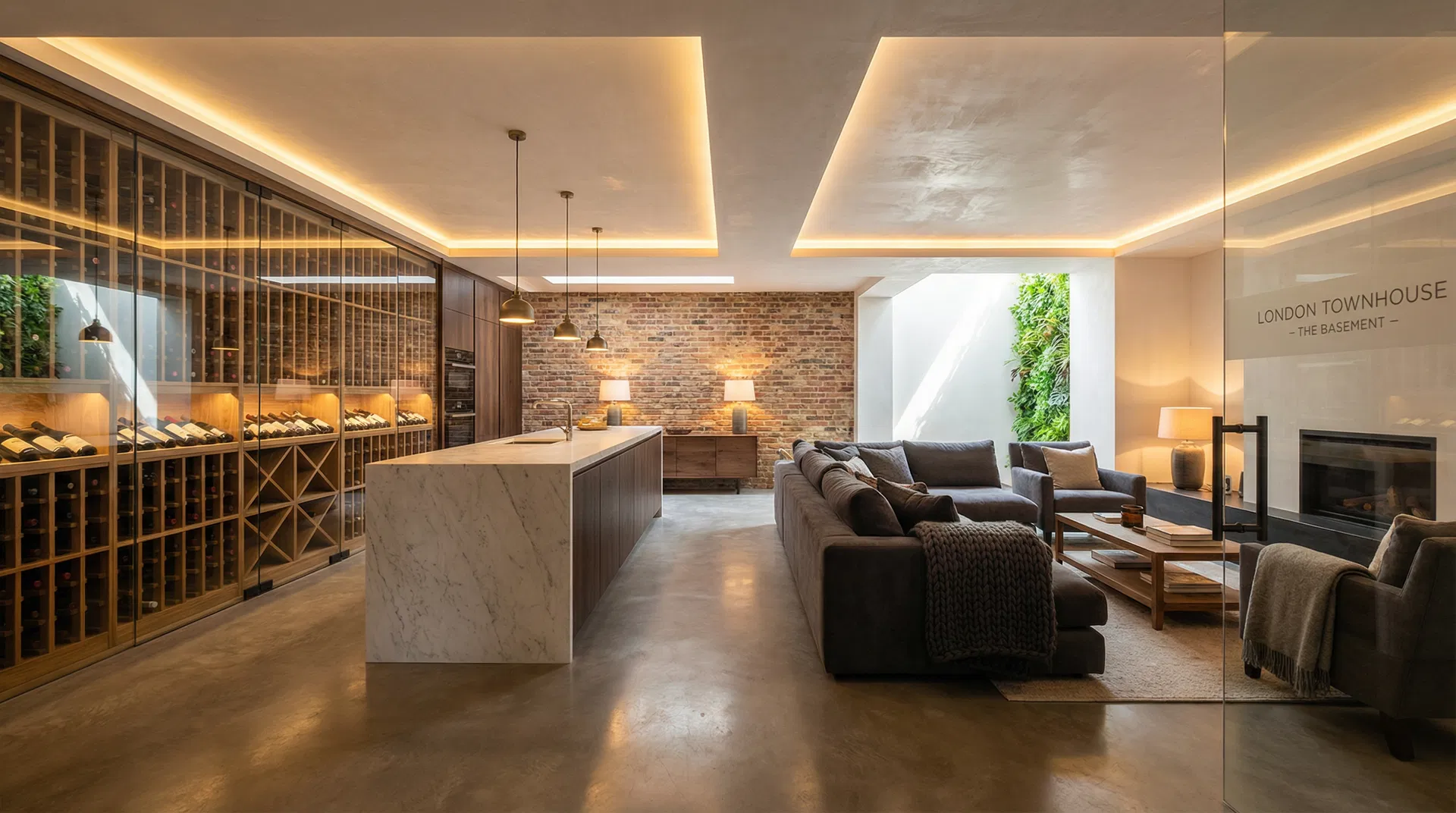
A large, open-plan basement living room or kitchen-diner — creating a dramatic new heart for the home.
Home Office / Studio
A quiet, naturally insulated workspace away from the rest of the house — ideal for focused work or creative projects.
Cinema / Media Room
A dedicated home cinema with acoustic insulation, projector, and surround sound — the ultimate entertainment space.
Wine Cellar / Leisure
A temperature-controlled wine cellar, gym, or games room — making use of the naturally cool basement environment.
Waterproofing: The Most Important
Element of Any Basement Project
Waterproofing is not optional — it is the foundation of every successful basement conversion. Here's what you need to know.
Type A — Barrier Protection
Tanking slurry or bituminous membranes applied directly to the structure. Suitable for low water table conditions. Relies on the structural integrity of the substrate.
Type B — Structurally Integral
Waterproof concrete or reinforced concrete structure. The concrete itself is the waterproofing. Requires specialist mix design and careful detailing at joints.
Type C — Cavity Drain
A dimple membrane is fixed to the walls and floor, creating a cavity that channels water to a sump pump. The most reliable system for existing basements with variable water pressure.
Waterproofing design is project-specific. Where BS 8102 or another current standard is applicable, the responsible specialist should define the design, interfaces and maintenance requirements. Any manufacturer or insurance-backed guarantee applies only where its written terms and eligibility are confirmed for the chosen system.
From Feasibility to Handover
Initial Assessment
Review the property, proposed use, available information and obvious access or site constraints. Further structural, ground or water information may be required.
Structural Input
Where structural design is required, the appropriately competent professional defines the relevant structural and temporary-works requirements.
Planning & Building Regulations
Confirm the planning, Building Regulations and any neighbour or party-wall requirements for the actual proposal. These are separate regimes and are not assumed from the project label alone.
Waterproofing Design
Where specialist waterproofing is required, the responsible designer or contractor defines the system, interfaces, maintenance and performance requirements for the project.
Construction
TCM can undertake building work directly and coordinate specialist contractors or professional disciplines where required by the agreed scope.
Finishing & Handover
Finishing, snagging, completion records, Building Regulations documentation and any warranty information depend on the agreed scope and responsible providers.
Basement Conversion Cost Guide
Basement conversion costs vary more than any other type of building project, due to the variability of soil conditions, water table, and existing structure. These are indicative guides for London and Hertfordshire.
| Project Type | Typical Cost | Added Value | Build Time | Planning |
|---|---|---|---|---|
| Existing Cellar Conversion | Project-specific | No guaranteed uplift | Project-specific | Property-specific |
| Basement Lowering | Project-specific | No guaranteed uplift | Project-specific | Property-specific |
| Full Basement Excavation | Project-specific | No guaranteed uplift | Project-specific | Property-specific |
| Extension + Basement | Project-specific | No guaranteed uplift | Project-specific | Property-specific |
Basement costs are project-specific. Compare quotations on the same structural, waterproofing, excavation, access, professional and statutory, specification, VAT and exclusion basis.
Experienced Basement
Conversion Specialists
Basement projects can involve significant structural, waterproofing, groundwater, drainage and access issues. Compare contractors on the defined scope, the professionals and specialists responsible for design, how temporary works and water management are handled, and the evidence actually available for the proposed project.
Where structural engineering is required, the responsible professional, appointment and design deliverables should be confirmed for the project. TCM can coordinate that input where agreed.
Specialist waterproofing input can be coordinated where required. The responsible designer, applicable standard and any guarantee terms are confirmed for the actual system and project.
TCM can undertake building work directly and coordinate specialists where required. Contracting, design and specialist responsibilities are confirmed in the project documents.
Use published customer reviews and any approved project evidence that is genuinely attributable to TCM; no unsupported basement-project count is stated here.
Project Evidence
A TCM-specific basement case or testimonial will only be published when the Experience Inputs Register contains the source, permission and page-assignment evidence required for reuse.
Read published reviewsView Contact Route Status
Assessment scope, any site visit and the professionals required are agreed for the individual property before work is commissioned.
Do you dream of more space but can't bear to leave your beloved home? We get it. Expanding upwards or outwards isn't always an option, and moving can be a huge headache. That's where a basement conversion comes in, offering a smart way to create the extra room you need right where you are. Simply put, a basement conversion transforms your underutilised cellar or crawl space into a functional, beautiful part of your home. Think new bedrooms, a home office, a gym, or even a self-contained flat. It's about digging down, reinforcing, waterproofing, and fitting out a space that's currently just... there. Why does this matter to you? A basement conversion can change how existing below-ground space is used, but feasibility, cost, disruption and any effect on property value are property-specific. TCM does not guarantee a financial return or value uplift from basement work.
Perhaps you've noticed your family is outgrowing your home, or you're just tired of that unused space beneath your feet. You know you need more room, but you're not sure how to get it without a major upheaval. Is there a way to expand your living area that feels right for your property and your budget?
What You Need to Know
Structural Design
Basement work can involve significant structural alterations. Where structural design or assessment is required, the appropriately competent professional should define the design; TCM can coordinate that input where it forms part of the agreed scope.
Waterproofing Design
Below-ground water management is project-specific. The selected waterproofing approach, design responsibility, drainage, maintenance and any warranty terms should be confirmed for the actual basement and intended use.
Party Wall Matters
The Party Wall etc. Act may apply depending on the work, boundaries and excavation relative to neighbouring structures. The property owner should obtain the appropriate advice and notices where required; TCM does not automatically act as the party-wall surveyor.
Project Coordination
TCM can undertake basement building work directly and coordinate specialist contractors or professional disciplines where required. Roles, communication and programme responsibilities are agreed for the individual project.
Everything Else You Should Know
Understanding Basement Conversion Costs
Basement costs depend on whether the project adapts an existing cellar or creates new below-ground space, as well as structural work, excavation, water management, access, services and finishes. TCM does not publish an unevidenced standard price range here.
Planning and Building Regulations
Planning permission, Building Regulations and other approvals depend on the property and proposed work. The relevant route and responsibilities should be checked before construction begins.
Basement vs Extension
A basement can preserve garden area while an extension changes the above-ground footprint, but neither route is universally better. Compare the type of space needed, feasibility, disruption, budget and professional requirements for the individual property.
Common Risks
Basement projects can involve structural, groundwater, drainage, access and neighbour-related risks. These should be assessed by the appropriate competent parties rather than reduced to a generic checklist.
Basement Projects and Local Property Constraints
Ground conditions, planning, access, party-wall matters and existing foundations vary by property. TCM does not publish a Harrow or “Metroland” feasibility pattern, soil rule or local project-count claim without approved location-matched evidence.
View the contact route status before relying on an enquiry channel. The required structural, waterproofing and other specialist inputs are identified for the individual project once a verified route is available.
Basement Conversion FAQs
Ready to Unlock Your
Basement's Potential?
Use the contact-status page to check which enquiry route is currently verified. Any specialist assessment required is identified for the individual property and proposed basement scope.
Explore Basement Conversions Location Pages
TCM Building & Maintenance is based in Borehamwood, Hertfordshire. The individual location pages provide project information for each place. Geographic coverage, availability, scope and access remain project-specific and should be checked through a verified contact route.
TCM Building & Maintenance is based in Borehamwood, Hertfordshire.
Explore the Radlett location page.
Explore the Bushey location page.
Explore the Potters Bar location page.
Explore the Watford location page.
Explore the St Albans location page.
Explore the Hatfield location page.
Explore the Welwyn Garden City location page.
Explore the Barnet location page.
Explore the Edgware location page.
Explore the Stanmore location page.
Online form delivery is currently unavailable. Please contact TCM by telephone or email. Contact TCM.